

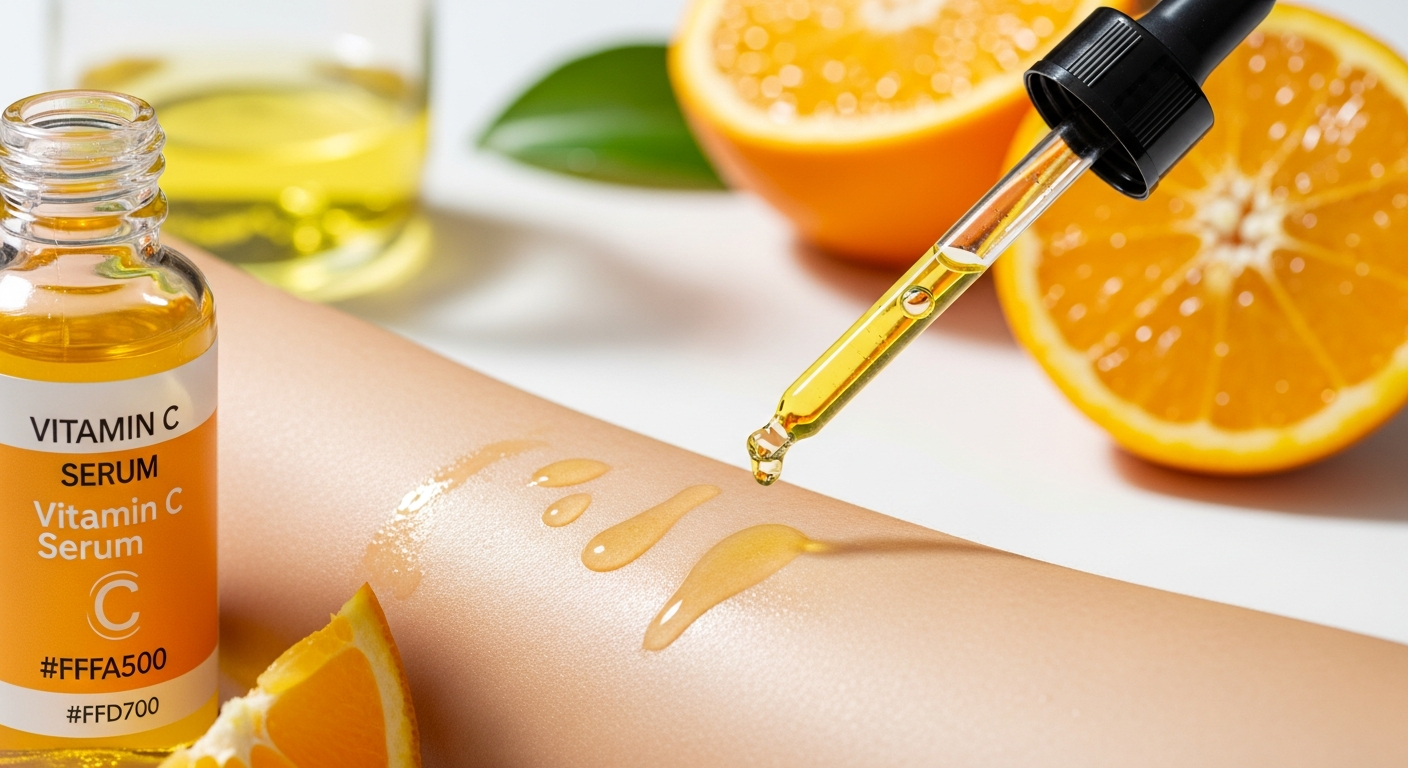
You apply your morning skincare routine religiously, yet your reflection still shows dull, uneven skin that lacks that coveted inner glow. The culprit? Cumulative sun damage, pollution exposure, and natural aging processes that leave skin looking tired and lackluster. This comprehensive guide reveals how vitamin C serum benefits for skin brightening work at the cellular level, transforming your complexion from the inside out.
TL;DR: Vitamin C serum brightens skin through three key mechanisms: inhibiting melanin production to fade dark spots, boosting collagen synthesis for improved texture and radiance, and neutralizing free radicals that cause dullness. For optimal results, use 10-20% L-ascorbic acid or stable derivatives like magnesium ascorbyl phosphate daily, paired with sunscreen protection.
How Does Vitamin C Actually Brighten Your Skin?
Vitamin C — scientifically known as L-ascorbic acid — functions as both an antioxidant and a tyrosinase inhibitor, making it uniquely powerful for skin brightening. Tyrosinase is the enzyme responsible for melanin production, the pigment that creates dark spots and uneven skin tone.
When applied topically, vitamin C penetrates the skin’s barrier and interferes with tyrosinase activity at the cellular level. This interruption prevents excess melanin formation while simultaneously promoting cellular turnover, helping existing dark spots fade more quickly. The result? A more even, luminous complexion that reflects light better.
Beyond melanin regulation, vitamin C stimulates fibroblast activity — the cells responsible for producing collagen and elastin. Fresh collagen creates smoother skin texture, which naturally appears brighter because it reflects light more evenly across the surface.
What Makes Vitamin C Superior to Other Brightening Ingredients?
Unlike harsh bleaching agents that merely strip pigment from the skin’s surface, vitamin C works synergistically with your skin’s natural renewal processes. This approach delivers sustainable brightening without compromising the skin barrier — crucial for maintaining long-term skin health.
The antioxidant properties set vitamin C apart from other brightening actives. Free radicals from UV exposure and pollution constantly attack skin cells, leading to oxidative stress that manifests as dullness and premature aging. Vitamin C neutralizes these harmful molecules before they can damage cellular structures.
Research shows that vitamin C is particularly effective against post-inflammatory hyperpigmentation — those stubborn dark marks left behind by acne breakouts. A 12-week clinical study found that 10% magnesium ascorbyl phosphate reduced melasma severity by 68% compared to placebo treatments.
The Collagen Connection
Vitamin C serves as an essential cofactor for collagen synthesis, meaning collagen production literally cannot occur without adequate vitamin C levels. This process involves converting proline and lysine amino acids into hydroxyproline and hydroxylysine — the building blocks of stable collagen fibers.
As collagen density improves, skin becomes firmer and more reflective. Fine lines diminish, pores appear smaller, and the overall complexion takes on that enviable “lit from within” glow that signifies healthy, youthful skin.
Which Type of Vitamin C Delivers the Best Brightening Results?
L-ascorbic acid remains the gold standard for vitamin C serums due to its extensive research backing and proven efficacy. However, its instability and potential for irritation have led to the development of stable vitamin C derivatives that offer similar benefits with improved tolerability.
- L-Ascorbic Acid (10-20%): Most potent form, ideal for experienced users seeking maximum brightening effects
- Magnesium Ascorbyl Phosphate (10-15%): Gentle, stable option suitable for sensitive skin types
- Sodium Ascorbyl Phosphate (5-10%): Water-soluble derivative with antimicrobial properties, excellent for acne-prone skin
- Ascorbyl Glucoside (2-5%): Slow-releasing form that converts to vitamin C within skin cells
The concentration matters significantly for brightening results. Studies indicate that concentrations below 8% show minimal brightening effects, while concentrations above 20% don’t provide proportionally greater benefits and may increase irritation risk.
How Should You Apply Vitamin C Serum for Maximum Brightening?
Timing and application technique dramatically influence vitamin C’s brightening effectiveness. Apply vitamin C serum to clean, dry skin in the morning, allowing 10-15 minutes for absorption before layering additional products.
The morning application timing isn’t arbitrary — vitamin C provides antioxidant protection against daily environmental stressors while simultaneously working to brighten skin throughout the day. Evening application can work too, but morning use maximizes both protective and corrective benefits.
- Cleanse with a gentle, pH-balanced cleanser
- Apply vitamin C serum to slightly damp skin for better penetration
- Wait 10-15 minutes before applying moisturizer
- Always follow with broad-spectrum SPF 30+ sunscreen
- Start with every other day application, gradually increasing to daily use
Consistency trumps concentration when it comes to brightening results. A 10% vitamin C serum used daily will outperform a 20% serum used sporadically. Your skin needs consistent vitamin C levels to maintain optimal collagen synthesis and melanin regulation.
What Results Can You Expect From Vitamin C Brightening?
Realistic expectations prevent disappointment and help you appreciate the gradual but significant improvements vitamin C delivers. Most users notice initial brightening effects — improved radiance and subtle glow — within 2-4 weeks of consistent use.
Dark spot fading requires more patience, with noticeable improvement typically occurring between 6-12 weeks. The timeline depends on several factors: spot depth, skin type, vitamin C concentration, and concurrent use of other brightening ingredients.
Clinical studies demonstrate measurable improvements in skin brightness and evenness after 8 weeks of daily vitamin C use. Participants showed an average 15% reduction in dark spot intensity and 23% improvement in overall skin radiance measurements.
Enhancing Results with Complementary Ingredients
Vitamin C works synergistically with other brightening actives when properly combined. Vitamin E stabilizes vitamin C and enhances its antioxidant capacity, while ferulic acid further boosts stability and penetration.
Niacinamide — vitamin B3 — complements vitamin C beautifully by reducing inflammation and regulating sebum production. Contrary to outdated information, these ingredients work well together when applied in separate layers or formulated at appropriate pH levels.
Can I use vitamin C serum with retinol for better brightening results?
Yes, but apply them at different times. Use vitamin C in the morning for antioxidant protection and brightening, then apply retinol at night for enhanced cellular turnover. This combination accelerates dark spot fading while preventing new pigmentation from forming.
Why isn’t my vitamin C serum brightening my skin?
Several factors could limit effectiveness: using too low a concentration (below 8%), inconsistent application, expired or oxidized product, or unrealistic timeline expectations. Dark spots require 6-12 weeks of consistent use to show significant fading.
Should I stop using vitamin C if my skin gets irritated?
Mild tingling is normal initially, but persistent irritation suggests the concentration is too high or you’re applying too frequently. Switch to a lower concentration or stable derivative like magnesium ascorbyl phosphate, and reduce application frequency until tolerance improves.
Can vitamin C serum help with melasma and age spots?
Vitamin C can help fade surface-level pigmentation and prevent new spots from forming, but deeper melasma may require professional treatments. Use vitamin C consistently alongside strict sun protection for best results with pigmentation disorders.
How do I know if my vitamin C serum is still effective?
Fresh vitamin C serum should be clear to pale yellow. If it turns brown or orange, the vitamin C has oxidized and lost potency. Store serums in cool, dark places and replace every 3-6 months for optimal brightening results.
Transform your skincare routine with the proven brightening power of vitamin C serum. Whether you’re targeting stubborn dark spots or simply seeking that enviable radiant glow, consistent vitamin C use delivers measurable results backed by decades of scientific research. Ready to discover your brightest complexion yet? Explore our curated selection of professional-grade vitamin C serums designed for every skin type and brightening goal.